


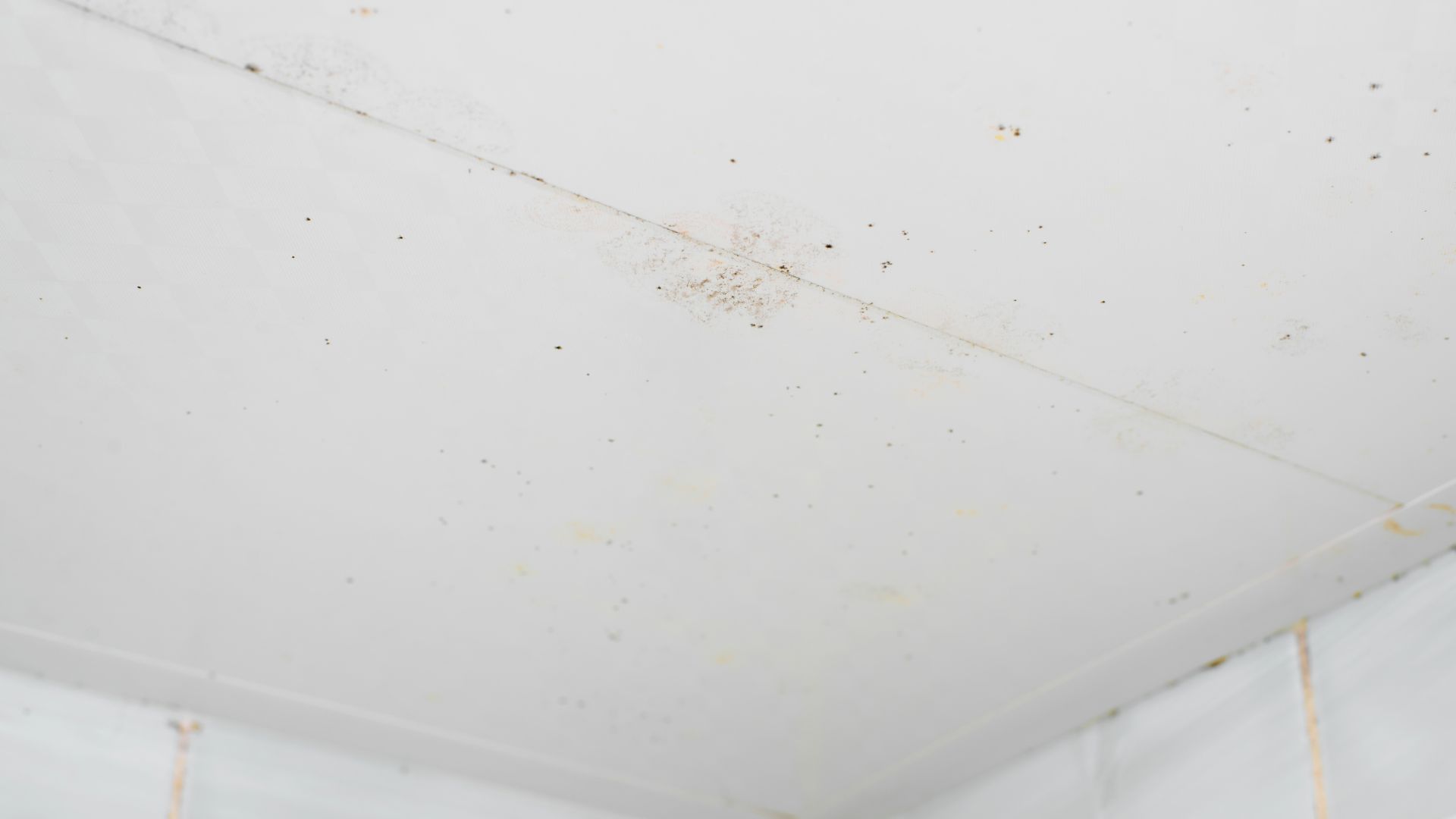
A small brown or yellow stain on the ceiling can be easy to dismiss.
Maybe it appeared after a heavy rain. Maybe it has been there for months and does not seem to be getting any larger. Or perhaps you painted over it and assumed the problem was gone.
But a water stain is not simply a cosmetic issue. It can be evidence that moisture has entered the building somewhere, and determining where that moisture came from is essential.
A roof leak, damaged flashing, failed roof penetration, plumbing issue, or another source of moisture can all contribute to staining. When the source is related to the roof, delaying an inspection can allow water to reach areas that are much more difficult and expensive to repair.
For homeowners, the important question is not just, “How do I remove the stain?”
It is, “Why is it there?”
What Causes Water Stains on a Ceiling?
Water stains generally appear when moisture reaches materials such as drywall, ceiling materials, insulation, or wood.
When the source is the roofing system, common possibilities include:
- Damaged or missing shingles
- Deteriorated flashing
- Failed seals around roof penetrations
- Problems around skylights
- Damaged roof valleys
- Storm-related damage
- Poor drainage that allows water to accumulate or enter vulnerable areas
However, not every ceiling stain originates from the roof. Plumbing leaks, condensation, and other sources of moisture can also produce similar signs.
That is why simply painting over a stain does not solve the underlying problem.
The source of the moisture needs to be identified first.
Does a Water Stain Mean the Roof Is Still Leaking?
Not necessarily.
A ceiling stain can remain visible after the original source of water has stopped. For example, a roof may have leaked during a previous storm, while the affected ceiling remains discolored long afterward.
On the other hand, an old-looking stain does not prove that the problem has been resolved.
Water can travel through roofing materials, insulation, and structural components before becoming visible inside the home. This means the location of the stain may not be directly below the actual point where water entered.
The National Roofing Contractors Association notes that professional roof inspections can identify damage that may not be obvious to homeowners.
That is why determining whether a stain represents an active leak, an old leak, or another moisture source requires more than simply looking at the ceiling.
Why Hidden Moisture Can Become a Bigger Problem
One of the biggest concerns with an unexplained ceiling stain is what may be happening behind the visible surface.
Moisture can affect materials that homeowners cannot see, including insulation, drywall, roof decking, and other building components.
The U.S. Environmental Protection Agency explains that hidden mold can occur behind drywall, above ceiling tiles, and in roof materials when moisture is present. It also emphasizes that controlling the source of moisture is essential to preventing mold growth.
This is why treating only the visible stain is not enough.
If the source of the moisture remains unresolved, the problem can return.
What Happens If You Ignore a Water Stain?
Ignoring a ceiling stain does not necessarily mean that serious damage will occur. But it does mean that the underlying cause remains unknown.
If the stain is related to an active roof leak, continued moisture exposure can potentially lead to:
Damaged drywall and ceiling materials
Repeated exposure to moisture can damage porous building materials and cause deterioration that may eventually require replacement.
Wet insulation
Moisture can compromise insulation performance. Wet materials should be addressed promptly rather than simply left to dry without determining why they became wet.
Damage to wood components
If moisture reaches roof decking or framing and remains there, the affected wood can deteriorate over time.
Mold growth
The EPA states that mold requires moisture to grow and recommends fixing the source of water problems promptly. Water-damaged areas and materials should also be dried as quickly as possible; the EPA notes that drying wet areas within 24 to 48 hours can help prevent mold growth.
The longer an unexplained moisture problem remains unresolved, the greater the opportunity for additional damage.
Why the Location of the Stain Can Be Misleading
One common mistake homeowners make is assuming that the roof problem must be directly above the ceiling stain.
Water does not always travel in a straight line.
It can move along roofing materials, decking, insulation, framing, and other surfaces before appearing inside the home. As a result, repairing the area directly above the stain without identifying the actual source may not resolve the problem.
This is particularly important around areas where different roofing components meet, such as:
- Flashing
- Chimneys
- Skylights
- Roof-to-wall transitions
- Vents and other penetrations
- Valleys
A professional inspection can help determine where the roofing system may have been compromised and whether additional areas need attention.
When Should You Call a Roofing Professional?
A professional roof inspection is especially important when a ceiling stain appears after rain, when the stain grows or changes, or when there are other signs of moisture.
Look for warning signs such as:
- New or expanding ceiling stains
- Damp or discolored drywall
- Water dripping from the ceiling
- Musty odors
- Visible roof damage
- Missing or damaged shingles
- Damaged flashing
- Water entering the attic
- Moisture around skylights or roof penetrations
You should also consider a professional inspection if your roof has recently experienced significant weather or if you are unsure about its current condition.
The NRCA recommends that homeowners avoid climbing onto their roofs themselves because of the fall risk and instead have qualified roofing professionals perform inspections.
Don’t Just Paint Over the Problem
Painting over a water stain may improve the appearance of the ceiling, but it does not determine where the moisture came from.
If the source is an active roof leak, the stain may return.
If moisture has reached hidden areas, the visible ceiling may represent only a small portion of the problem.
And if the source is unrelated to the roof, covering the stain still does not address the underlying cause.
The right approach is to identify the source first and then determine what repair or maintenance is actually necessary.
Protect Your Home Before a Small Warning Becomes a Major Repair
A water stain may look small, but it deserves attention.
The goal is not to assume that every stain means you need a new roof. The goal is to determine what caused it and address the problem before additional damage develops.
Roger Roofing provides professional roof inspections, roof leak repairs, and maintenance services to help homeowners identify roofing problems and keep their roofing systems in good condition.
If you have noticed a new water stain, recurring moisture, or signs of a possible roof leak, do not wait for the next storm to find out whether the problem is still active.
Schedule a professional roof inspection with Roger Roofing today and find out what is happening above that stain before a small warning becomes a much larger repair.
Comments are closed